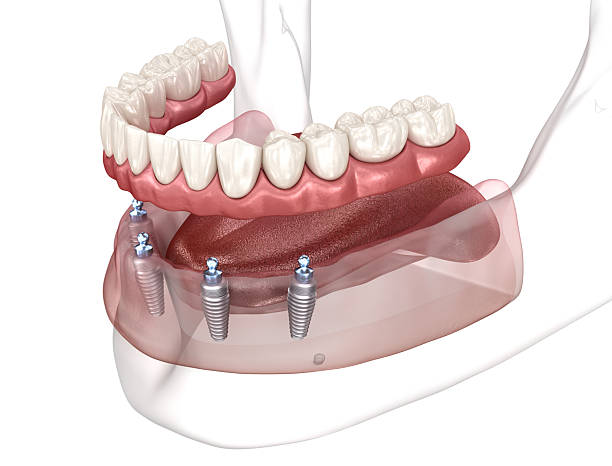

Gum disease does not automatically rule out dental implants. People who have had periodontal disease, including those who lost teeth to periodontitis and bone loss, can still be evaluated for implant treatment. Getting dental implants with gum disease depends on whether your mouth can support an implant and whether you can keep the area clean.
Are you considering dental implants in Raleigh, NC, after losing teeth to gum disease? The key question is usually not whether you have ever had periodontitis. It is whether the disease is controlled now and whether your remaining bone and gum tissue can support implant treatment.
Can You Get Dental Implants If You Have Gum Disease?
Potentially, yes, but active gum disease generally needs to be evaluated and treated before implant placement.
Like natural teeth, dental implants depend on healthy surrounding tissue. Active inflammation can interfere with healing after surgery and can make it harder to keep a new implant healthy.
- Healthy supporting bone at the implant site
- Stable gum tissue around the implant
- Bacteria and inflammation that are under control
- Your ability to keep the area clean every day
- Consistent long-term follow-up care
Treating gum disease is an important step, but it does not guarantee that implants will be the right option. Your gums, bone, and overall health still need to be evaluated together.
Active Gum Disease Is Different From a History of Gum Disease
“Having gum disease” can describe very different situations. Active periodontal disease means inflammation and damage to the tooth-supporting tissues are still happening and need management. A history of periodontal disease means the disease was treated in the past and is currently stable.
| Feature | Active Periodontal Disease | History of Treated Periodontal Disease |
|---|---|---|
| Inflammation | Ongoing | Controlled |
| Bone and Attachment Loss | May still be progressing | Previous damage, but currently stable |
| What It Needs | Management before implant treatment | Ongoing maintenance and monitoring |
| Implant Outlook | Implant treatment is usually delayed until the disease is controlled | May be evaluated for implants |
This distinction shapes many implant planning decisions.
Previous Periodontitis Does Not Automatically Disqualify You From Dental Implants
If you have had periodontitis in the past, it becomes part of your risk assessment rather than a reason to rule out implants entirely. Your dentist will look at the full picture, including:
- Your periodontal history and how severe it was
- Whether your gums are stable today
- How much bone remains at the planned implant site
- Your daily oral hygiene
- Smoking or tobacco use
- Health conditions such as diabetes
- Whether you keep up with maintenance visits
A careful evaluation shows whether implant treatment makes sense for you and what it would take to keep an implant healthy over time.
Why Gum Health Matters Before Dental Implant Surgery
Natural teeth and dental implants attach to the jaw differently. A natural tooth is held in place by the periodontal ligament, a layer of fibers that connects the tooth to surrounding bone. An implant connects directly to the bone through a process called osseointegration.
Despite that difference, both depend on healthy surrounding tissue. Active inflammation and poor plaque control can create an unfavorable environment for implant surgery and healing.
Periodontitis Can Destroy the Bone That Supports Teeth
Periodontitis is more than “infected gums.” It affects the structures that hold your teeth in place, including the gum attachment and the jawbone.
According to the National Institute of Dental and Craniofacial Research, gum disease typically begins with swollen, red, and bleeding gums. Without treatment, it can spread to the bone around the teeth. In the worst cases, teeth may loosen or need to be removed.
The process usually follows this path:
- Plaque, a sticky film of bacteria, builds up along and below the gum line.
- The gums become inflamed.
- Pockets form as the gums pull away from the teeth.
- The tissue that attaches the gums to the teeth breaks down.
- The alveolar bone, the part of the jaw that holds teeth, is gradually lost.
- Teeth may loosen and eventually be lost.
Dental Implants Also Depend on Healthy Supporting Bone
An implant needs enough bone at the planned site to be placed in the right position and hold steady while it heals. That is why bone is a central part of implant candidacy. Your dentist considers:
- Bone height: How tall the jaw ridge is
- Bone width: How thick the ridge is from the cheek side to the tongue side
- Bone quality: How dense and healthy the bone is
- Ridge anatomy: The shape of the jaw where the tooth was lost
Periodontal bone loss can affect any of these. That is why the effects of past gum disease matter even after the disease itself is controlled.
Healthy Gum Tissue Helps Create a Maintainable Implant Environment
Healthy gums do more than improve how an implant looks. Stable tissue around an implant forms a seal that helps protect the bone underneath.
Healthy tissue also makes the area easier to clean. When you can remove plaque effectively, the tissue around the implant, called peri-implant tissue, is more likely to stay healthy. Regular professional maintenance helps keep that tissue stable over the long term.
Gingivitis vs Periodontitis: Why the Diagnosis Matters for Implant Planning
Patients often use “gum disease” as an umbrella term. However, gingivitis and periodontitis affect implant planning in very different ways.
Gingivitis Causes Gum Inflammation Without Periodontal Bone Loss
Gingivitis is plaque-induced inflammation of the gums. Common signs include redness, swelling, and bleeding when you brush or floss.
Gingivitis does not involve loss of the bone and tissue that hold teeth in place. It can usually be reversed with daily brushing and flossing along with professional cleanings. For implant planning, gingivitis still needs to be controlled, but it has not damaged the bone an implant would rely on.
Periodontitis Can Damage the Bone and Supporting Tissues Around Teeth
Periodontitis is the advanced form of gum disease. Its pockets, attachment loss, and alveolar bone loss can eventually loosen teeth and lead to tooth loss.
Bone loss is the key difference for implant planning. Bone destroyed by periodontitis generally does not regrow on its own. It may affect how much bone is available for an implant, where it can be placed, and whether additional procedures are needed.
What Has to Happen Before Dental Implants If You Have Periodontal Disease?
Getting from gum disease to implant treatment usually follows a logical sequence: diagnosis, disease control, reassessment, bone evaluation, and implant planning. Not every patient needs every treatment listed below, but the order matters.
Step 1: Your Periodontal Health Needs to Be Evaluated
The process starts with understanding the current state of your gums and supporting bone. An evaluation may include:
- A gum examination for signs of inflammation and bleeding
- Periodontal probing, when appropriate, to measure the pockets around your teeth
- Checking for gum recession
- Assessing tooth mobility
- Reviewing plaque levels
- Dental X-rays or imaging to look at bone levels
- A review of your periodontal and medical history
In a healthy mouth, the pockets around teeth usually measure between 1 and 3 millimeters. Deeper pockets can be a sign of periodontal disease. X-rays can also reveal bone loss caused by gum disease.
Step 2: Active Gum Disease Needs to Be Stabilized
The goal of this step is to reduce active inflammation and create a mouth you can keep healthy. Depending on your diagnosis, management may involve:
- Professional periodontal therapy
- Scaling and root planing, a deep cleaning below the gum line
- Improved daily plaque control at home
- Regular periodontal maintenance visits
- Periodontal surgery in selected situations
- Removal of teeth that are unlikely to be saved, when clinically necessary
Your treatment depends on your specific diagnosis. The right approach for one patient may not fit another. Depending on how complex your case is, this care may come from your general dentist or a periodontist.
Step 3: The Dentist Reassesses the Gums and Supporting Bone
Completing periodontal treatment is not the same as responding to it. A single cleaning does not confirm that the disease is under control.
After treatment, your dentist reevaluates how your mouth has responded. This reassessment may look at:
- Whether inflammation has improved
- Whether the gum tissue has stabilized
- How well you control plaque at home
- Changes in periodontal pocket depths
- The shape and condition of the remaining bone
- The long-term outlook for your remaining teeth
This step is often where the path to implants becomes clearer.
Step 4: Available Bone Is Evaluated for Implant Placement
Periodontal disease does not affect every area of the mouth the same way.
Bone evaluation can include a clinical exam and dental imaging. When appropriate, 3D Cone Beam CT imaging shows the height and width of the jaw ridge. It also shows how close the planned implant site is to structures such as nerves and the sinuses.
Step 5: A Personalized Dental Implant Plan Can Be Developed
Implant planning brings all of this information together. Your plan considers:
- Your periodontal condition and stability
- How much bone is available
- Where the missing teeth are located
- Your restorative goals
- Your medical history
- The best implant position for the final teeth
A well-planned implant is not just a screw placed where a tooth used to be. Its position is guided by both the final restoration and the health of the surrounding tissue. At Carolina Implant, the surgical, restorative, and lab teams plan together in one office, which helps align these factors from the start.
What If Gum Disease Has Caused Bone Loss?
Bone loss does not automatically mean implant treatment is impossible. However, the amount, location, shape, and quality of your remaining bone must be carefully evaluated.
Periodontal Bone Loss Can Reduce the Bone Available for an Implant
When periodontitis destroys the bone around a natural tooth, that bone loss often remains after the tooth is gone. The jaw ridge can also shrink further after an extraction. As a result, the future implant site may be shorter, narrower, or uneven.
Bone loss patterns vary widely between patients and even between sites in the same mouth. Two patients with a similar history may have very different bone at their implant sites.
Bone Grafting May Be Considered When Additional Bone Is Needed
If the available bone is not enough to support an implant, your dentist may recommend procedures to rebuild it. Options can include:
- Bone grafting to add volume where bone has been lost
- Ridge augmentation to rebuild a narrow or shallow jaw ridge
- Socket preservation at the time of an extraction to help limit bone loss
- Other regenerative procedures to support new bone growth
Not every patient with a periodontal history needs grafting. Others have enough bone at the planned site. If your evaluation shows that you need bone grafting for dental implants, your implant team will explain how it fits into your timeline.
Severe Bone Loss Requires More Detailed Implant Planning
When bone loss is extensive, your dentist may need to adjust:
- Where implants are positioned
- The length and width of the implants
- How many implants are used
- The grafting approach
- The design of the final restoration
- Whether treatment happens in stages
More complex cases need more planning, but complexity alone does not rule out implants.
Can Dental Implants Get Gum Disease?
Dental implants cannot get periodontal disease in exactly the same way natural teeth do. They do not have a periodontal ligament, the fibers that attach a natural tooth to bone. However, inflammatory disease can still develop in the tissue around an implant.
Implants cannot get cavities, but that does not make gum health irrelevant. Plaque can still build up around an implant and cause inflammation.
When the tissue around an implant is healthy, it is described as peri-implant health. Peri-implant health is characterized by the absence of redness, bleeding on probing, swelling, and pus. When inflammation does develop, it generally falls into one of two conditions.
Peri-Implant Mucositis Affects the Soft Tissue Around an Implant
Peri-implant mucositis is inflammation of the soft tissue around an implant, without the progressive bone loss seen in peri-implantitis. Signs can include redness, bleeding, and swelling of the gums around the implant.
Research strongly links peri-implant mucositis to plaque buildup. With improved plaque control and professional care, it can often be reversed.
Peri-Implantitis Can Involve Progressive Bone Loss Around an Implant
Peri-implantitis is a plaque-associated condition marked by inflammation of the tissue around an implant and progressive loss of supporting bone. The key difference is bone. Mucositis affects only the soft tissue, while peri-implantitis also involves the bone that supports the implant.
| Feature | Peri-Implant Mucositis | Peri-Implantitis |
|---|---|---|
| Tissue Affected | Soft tissue around the implant | Soft tissue and supporting bone |
| Bone Loss | No progressive bone loss | Progressive supporting bone loss |
| Common Signs | Redness, bleeding, swelling | Inflammation plus bone loss seen on imaging |
Having periodontitis does not mean you will develop peri-implantitis. It does mean consistent monitoring matters, as the next section explains.
Does a History of Gum Disease Increase Dental Implant Risks?
A history of periodontitis can matter for future implant health, especially when it is combined with other risk factors. An international consensus report on peri-implant diseases found strong evidence of higher peri-implantitis risk in certain patients. These include patients with a history of severe periodontitis, poor plaque control, and no regular maintenance after implant treatment.
Ongoing gum inflammation and smoking are also factors your dentist will weigh. Risk is not destiny. Higher risk means the factors you and your dental team can control become more important.
Periodontal History Is One Part of Implant Risk Assessment
Your periodontal history is weighed alongside the factors covered earlier, including gum stability, smoking, plaque control, health conditions such as diabetes, and maintenance visits. Your dentist also considers your bone anatomy, implant positioning, and whether the final restoration will be easy to clean.
Long-Term Periodontal Maintenance Still Matters After Implant Placement
Replacing a tooth is not the same as treating the condition that caused you to lose it. The bacteria and inflammatory tendency behind periodontitis remain, so ongoing periodontal maintenance still matters for your remaining teeth and implants.
What If You Lost Teeth Because of Gum Disease?
If periodontitis caused your tooth loss, your evaluation focuses on two separate questions:
- Has the gum disease been stabilized?
- Is there enough healthy bone and tissue for the proposed replacement?
Depending on those answers, replacement options may include a single dental implant, multiple implants, an implant-supported bridge, an implant-supported denture, or full-arch implant treatment. The right choice depends on how many teeth are missing and the condition of your mouth.
The Cause of Tooth Loss Matters When Planning Replacement
Your dentist will want to know why each tooth was lost. Common reasons include periodontal disease, fracture, decay, trauma, root canal problems, or other causes.
The cause matters because tooth loss from periodontitis can signal disease that affects other teeth and their supporting bone. A tooth lost to a sports injury raises different planning questions.
Remaining Teeth Need to Be Considered in the Overall Treatment Plan
Implant planning should not happen in isolation. Your dentist also looks at:
- The long-term outlook for your remaining teeth
- Whether those teeth have stable gum support
- How your bite fits together
- Where the missing teeth are located
- How easy it will be to keep everything clean
- Your long-term restorative plan
A plan that replaces one tooth while neighboring teeth are failing may not serve you well in the long run.
How Long After Gum Disease Treatment Can You Get Dental Implants?
There is no single waiting period that applies to everyone. Timing depends on:
- How severe the gum disease was
- How well you responded to treatment
- Whether you need extractions or grafting
- The condition of your bone
- The implant procedure being planned
The important endpoint is disease stability and healthy tissue, not simply waiting a set number of weeks.
Periodontal Stability Matters More Than a Fixed Calendar
Implant treatment should move forward when your mouth is biologically ready. In general, that means inflammation is under control, the gum tissue has stabilized, and you can keep plaque in check at home. The bone at the planned site also needs to be ready to support an implant.
A patient who responds quickly to periodontal therapy may reach that point sooner than someone whose inflammation takes longer to control. Your dentist uses reassessment findings, not the calendar alone, to decide when it is appropriate to proceed.
Bone Grafting or Tooth Extraction Can Add Additional Healing Stages
Some patients move through a longer sequence, such as:
Periodontal therapy → extraction → grafting and healing → implant placement → osseointegration → final restoration
Others follow a shorter or different path. For example, some patients have no teeth left to remove. In selected cases, an implant may be placed at the same visit as an extraction.
After placement, the implant goes through its own healing process before it can support permanent teeth. You can learn more about how dental implants heal after placement and why that timeline also varies.
Can You Get Full-Arch Dental Implants After Severe Gum Disease?
Patients who have lost, or are losing, many teeth to periodontal disease may sometimes be evaluated for full-arch implant treatment. Candidacy depends on individual anatomy and on whether the disease is controlled.
When periodontitis has affected most of the teeth in an arch, part of the decision is whether any remaining teeth can be kept long term. Teeth with poor periodontal support may be considered for removal as part of the plan.
Your evaluation may consider:
- The condition of any remaining teeth
- The periodontal prognosis of those teeth
- Bone volume across the arch
- Your restorative goals
- Where implants can be placed for balanced support
- Your ability to clean around a full-arch restoration
- Your commitment to long-term maintenance
Full-arch treatment replaces the teeth, but it does not eliminate the need to control inflammation. Healthy tissue around the implants remains essential. For a closer look at candidacy factors, read more about who qualifies for full arch dental implants.
How Can Patients With a History of Gum Disease Protect Dental Implants Long Term?
Protecting implants after periodontitis depends largely on consistent habits and follow-up care:
- Remove plaque thoroughly every day
- Clean carefully around implant crowns, bridges, or full-arch teeth
- Keep up with professional maintenance visits
- Have your gums and implants monitored regularly
- Stop smoking or using tobacco, if applicable
- Manage health conditions such as diabetes
- Report bleeding or swelling around an implant promptly
For detailed care tips, see this guide to long-term dental implant maintenance.
Dental Implants Still Require Daily Plaque Control
Implants cannot decay, but plaque can still collect around them and inflame the surrounding tissue. Daily cleaning matters just as much as it does for natural teeth.
Professional Periodontal and Implant Monitoring Remains Important
A new implant does not remove your tendency toward gum inflammation. Regular professional visits help catch early inflammation around teeth or implants before it progresses.
Dental Implants and Gum Disease FAQs
Can I get dental implants if I currently have gum disease?
Potentially, but active gum disease generally needs to be evaluated and managed first. Implant surgery works best in a mouth where inflammation is controlled and the tissue can be kept clean. Once your gums are stable, your dentist can assess your bone and decide whether implant treatment is appropriate.
Can you get dental implants after periodontal disease?
Yes, it is often possible. A history of periodontal disease does not automatically rule out implant treatment. Your dentist will consider your current gum stability, remaining bone, oral hygiene, smoking status, and overall health. Candidacy is always decided through an individual evaluation.
Can you get implants if gum disease caused bone loss?
Potentially. Bone loss does not automatically rule out implants, but the amount, location, and shape of your remaining bone must be evaluated. Imaging helps show whether there is enough bone at the planned site. If there is not, bone grafting or ridge augmentation may be recommended to rebuild support.
Do gums grow around dental implants?
Yes, gum tissue heals around an implant and forms a protective seal. However, it does not attach exactly the way gums attach to a natural tooth, because implants lack the periodontal ligament found around natural teeth. Keeping this tissue healthy through daily cleaning and professional care helps protect the bone underneath.
Can gum disease cause a dental implant to fail?
It can contribute. The implant version of gum disease, called peri-implantitis, involves progressive bone loss around the implant. If it is not managed, it can weaken the implant’s support. However, implant problems can have other causes too, such as excessive bite forces or problems during healing. Not every implant failure is caused by gum disease.
How healthy do gums need to be before dental implants?
There is no single measurement that applies to everyone. Generally, your periodontal disease should be stable, with inflammation under control and gums you can keep clean. Your dentist evaluates bleeding, pocket depths, plaque control, and bone levels together to decide whether your mouth is ready for implant treatment.
Do I need a periodontist before getting dental implants?
Not always. It depends on your periodontal condition and how complex your treatment is. Some patients need care from a periodontist, a gum disease specialist. Others receive the care they need from their general dental team. Your dentist will recommend a referral if your situation calls for specialized periodontal treatment.
How long after periodontal treatment can implants be placed?
There is no universal timeline. Implants can be considered once your gums have responded to treatment and remain stable. Your dentist reassesses inflammation, tissue health, and bone before moving forward. Extractions or bone grafting may add healing time to the overall plan.
Schedule a Dental Implant and Periodontal Evaluation in Raleigh, NC
A history of gum disease does not necessarily mean dental implants are no longer an option. The first step is finding out whether your gum inflammation is controlled and how much supporting bone remains. From there, your team can plan the healthiest foundation for tooth replacement.
Have you lost teeth to gum disease or been told you have periodontal bone loss? Schedule a dental implant consultation in Raleigh, NC, to have your gums, bone, and implant options evaluated together. Carolina Implant brings surgery, restoration, and lab work under one roof, led by board-certified implantologist Dr. William Daily (DABOI/ID).
We use 3D Cone Beam CT imaging to assess your bone and plan implant placement. If gum treatment or bone grafting is needed first, we will explain where it fits in your plan. For the implant phases of your treatment, coordinated care means fewer referrals and visits, and it helps keep treatment affordable.
Call Carolina Implant at (919) 823-3015 or schedule a free consultation. You will find out what your gums and bone can support and whether dental implants are right for you.