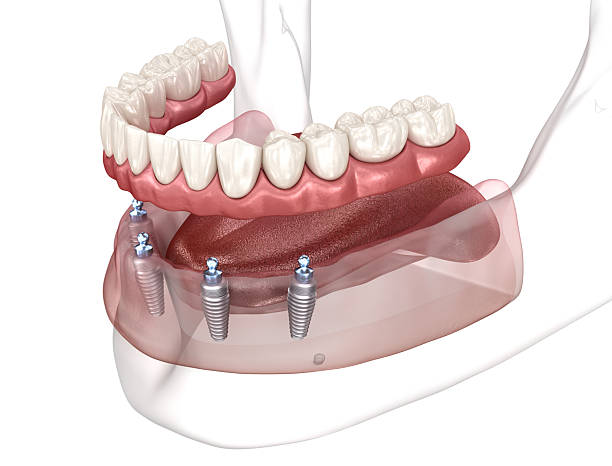

After a dental implant is placed in your jawbone, the surrounding tissues begin a coordinated healing process. Over the following weeks and months, new bone forms and remodels around the implant surface. This process is called osseointegration. It gives the implant the biological stability it needs to support your final crown or restoration.
Patients considering dental implants in Raleigh, NC, often want to know what is actually happening beneath the gums during the months between implant placement and the final restoration. The healing period is more than waiting for a titanium implant to “set.” It is a series of biological stages, and each one builds on the last.
This guide walks through the dental implant healing stages. You will learn how implant stability develops, why healing timelines vary, and how your implant dentist decides when you are ready for your permanent teeth.
What Happens After a Dental Implant Is Placed?
During implant surgery, your dentist places the implant in the bone prepared to receive it. As soon as surgery ends, your body begins wound healing in both the jawbone and the surrounding gum tissue.
Implant healing involves two connected processes:
- Gum and soft tissue healing: The gums and surgical site close and recover.
- Bone healing and integration: Living bone forms around the implant surface and gradually integrates with it.
These processes support each other. As the gums heal, they form a seal that helps protect the bone healing underneath.
However, the two processes do not finish at the same time. Your gums may look and feel healed well before osseointegration is complete. A healed-looking site does not mean the implant has the stability it needs for chewing forces.
Primary Stability Begins at Implant Placement
Primary implant stability is the mechanical stability the implant has on the day it is placed. It comes from the implant fitting snugly into the prepared bone, much like a screw gripping wood.
Several factors influence primary stability:
- Bone density at the implant site
- Implant length, width, and thread design
- Implant position and angle
- How the surgical site is prepared
- The amount of available bone
Primary stability is not the same as osseointegration. An implant can be mechanically secure on day one, before any biological integration has occurred.
A Blood Clot Forms Around the Surgical Site
During and right after placement, blood fills the small spaces between the implant and the bone. That blood forms a clot, which helps stop bleeding and stabilizes the wound.
The clot contains a fibrin matrix, a mesh-like network made from a protein called fibrin. Healing cells use this network as a path toward the implant surface. Tiny new blood vessels also begin developing, bringing oxygen and nutrients to the area.
The first several days matter because the clot is the starting framework for everything that follows. When it stays stable, it sets the stage for gum healing and the bone formation that comes next.
Stage 1: Early Surgical and Gum Healing in the First Few Days
In the first few days after dental implant surgery, your body works to stabilize the clot and begin soft tissue repair. Controlled inflammation drives much of this early work. Mild swelling, tenderness, and some bruising are common during this phase, and they are part of how your body begins to heal.
Inflammation Is Part of the Body’s Initial Healing Response
A controlled inflammatory response is a normal part of wound healing. Inflammatory cells move into the area to clear damaged tissue and bacteria. They also send signals that recruit the cells responsible for repair.
In typical healing, swelling and tenderness peak early and then gradually improve. Call your dentist if symptoms get worse instead of better, or last longer than you were told to expect. Only a professional exam can determine what is causing them.
The Gum Tissue Begins Closing Around the Implant Site
While bone healing is just getting started, the gum tissue begins to close. The outer layer of gum tissue grows across the incision, and deeper connective tissue rebuilds underneath. If you have sutures, they hold the tissue in place during this early closure.
Implant protocols differ, and your dentist chooses the approach that fits your case:
- Submerged (buried) healing: Gum tissue covers the implant while it heals, and your dentist uncovers it at a later visit.
- Non-submerged healing: A healing abutment, sometimes called a healing cap, extends through the gums. This small part helps shape the tissue while the implant integrates.
Both approaches can work well. The choice depends on your implant stability, the implant location, and your treatment plan.
Stage 2: Early Bone Healing Begins Around the Dental Implant
Once soft tissue repair is underway, the central work of implant healing happens where you cannot see it. Cells that become osteoblasts travel through the framework the blood clot created. Osteoblasts are bone-forming cells that help produce new bone around the implant.
New Bone Begins Forming Around the Implant Surface
The small gaps left after surgery do not stay empty. Osteoblasts gradually lay down new bone along the implant surface and fill these spaces. As this bone forms, the body also begins remodeling it.
This process increases bone-to-implant contact, meaning the share of the implant surface in direct contact with living bone. More contact gives the implant a stronger biological foundation.
You may hear people say an implant “fuses” with the bone. That is a helpful shorthand, but the actual biological process is called osseointegration. It happens gradually, as new bone forms layer by layer.
Primary Stability Gradually Gives Way to Biological Stability
At placement, the implant relies on mechanical grip. As healing begins, the body starts remodeling the bone that was affected during surgery. It removes some of this original bone and replaces it with new, living bone. As a result, mechanical stability gradually decreases while biological stability increases.
This biological stability is called secondary implant stability. As a systematic review in the journal Materials explains, it develops through bone remodeling and regeneration around the implant.
Because of this handoff, stability does not rise in a perfectly straight line from day one. There can be a period when the original mechanical grip is fading and new bone is still maturing. This is one reason your care team carefully times when the implant starts receiving chewing forces.
| Feature | Primary Stability | Secondary Stability |
|---|---|---|
| Type | Mechanical | Biological |
| When It Starts | At implant placement | Develops during healing |
| Where It Comes From | Implant gripping the prepared bone | New bone forming and remodeling around the implant |
| Influenced By | Bone density, implant design, surgical preparation | Bone healing, overall health, oral hygiene, controlled forces |
| Change Over Time | Gradually decreases as bone remodels | Gradually increases as osseointegration progresses |
Stage 3: Osseointegration Creates a Stable Bone-to-Implant Connection
Osseointegration is the biological process through which living bone forms and maintains direct functional contact with the surface of a dental implant. This connection allows an implant to act as an anchor for replacement teeth.
Osseointegration matters because your final restoration will place real forces on the implant. When you bite, the crown transfers that force through the implant into your jawbone. Strong bone-to-implant contact gives the implant the stability it needs to handle chewing forces over time.
Why Titanium Dental Implants Can Integrate With Bone
Titanium is widely used for dental implants because it is biocompatible, which means the body generally tolerates it well. When titanium is exposed to air and body fluids, a thin oxide layer forms on its surface. Bone cells can attach to this surface and grow along it.
Many modern implants also have textured surfaces that give bone cells more area to grip. Together, the material and the surface help create a stable interface between bone and implant.
Zirconia implants are another option, and comparing the two materials is a separate topic. No implant material guarantees integration for every patient, and healing still depends on the individual.
Bone Continues Remodeling Around the Implant
Osseointegration is not a single moment when the implant suddenly becomes “integrated.” It is a gradual progression.
The first bone that forms is often called immature or woven bone. It forms quickly but is less organized. Over time, this bone matures as the body remodels it into stronger, more organized bone that is better suited to carrying load.
This maturing bone is what builds the stability your implant needs before it can support a final restoration. Remodeling continues even after your restoration is placed. Healthy bone keeps adapting to chewing forces throughout the life of the implant, which supports long-term implant stability.
How Long Does Dental Implant Osseointegration Take?
There is no universal healing period for every implant patient. Osseointegration commonly takes place over weeks to several months. When you receive your restoration depends on your individual clinical situation.
According to the American Dental Association, osseointegration takes time, and some patients may need to wait up to several months before replacement teeth can be attached. Others can have implants and replacement teeth placed in one visit. Even then, the bone around the implant still needs time to heal.
Several factors shape your timeline, including implant location, bone quality, grafting needs, and your overall health. The table below shows the general sequence of the dental implant healing timeline. Timing varies from person to person.
| Healing Phase | What Is Happening | What You May Notice |
|---|---|---|
| Early Surgical Healing (First Few Days) | A clot forms, inflammation begins, and the gums start closing | Mild swelling, tenderness, possible bruising |
| Soft Tissue Healing (First Weeks) | Gum tissue closes and matures | The area feels more comfortable |
| Early Bone Formation (First Weeks) | Osteoblasts lay down new bone, and biological stability begins replacing mechanical stability | Usually nothing you can feel |
| Osseointegration and Remodeling (Weeks to Several Months; Timing Varies) | Bone-to-implant contact increases and new bone matures | Usually nothing you can feel |
| Restorative Evaluation | Your dentist checks stability, bone, and gum health | An exam at your follow-up visit |
| Final Restoration | Your permanent crown, bridge, or full-arch teeth are placed | Restored chewing function |
Implant Location and Bone Quality Can Affect Healing
Different areas of the jaws have different bone characteristics. The outer shell, called cortical bone, is dense and firm. The inner bone, called cancellous or trabecular bone, is spongier and more porous.
In general, the lower jaw tends to have denser bone than the upper jaw. The back of the upper jaw often has the softest bone and the least bone volume. Front and back regions also differ in bone thickness and in the chewing forces they handle.
Denser bone may offer more initial grip. Softer bone often has a rich blood supply but may provide less primary stability. Your implant dentist considers bone density and available volume when planning your timeline.
Bone Grafting Can Change the Overall Treatment Timeline
Some patients need extra bone support before or during implant treatment. This may include:
- Socket preservation after a tooth extraction
- Ridge augmentation to rebuild a narrow or shallow jaw ridge
- Bone grafting to add volume where bone has been lost
- Sinus augmentation to add bone in the upper back jaw
Graft maturation and implant osseointegration are two separate healing processes. A graft needs time to become part of your own bone. The implant also needs time to integrate with the surrounding bone.
Sometimes these processes overlap, with the graft and implant placed together. Other times, treatment is staged, and your dentist places the implant after the graft heals. If your consultation shows that you need bone grafting before dental implants, your implant team will explain how it fits into your plan.
Health and Lifestyle Factors Can Influence Implant Healing
How quickly and predictably an implant heals depends partly on the patient. Factors that can influence dental implant healing include:
- Smoking or other tobacco use, which can reduce blood flow to healing tissue
- Diabetes, especially when blood sugar is not well controlled
- Gum disease, infection, or ongoing inflammation in the mouth
- Oral hygiene habits during healing
- Certain medications that affect bone or healing
- Overall health, including conditions that affect healing or immunity
- Teeth grinding or clenching, which can put extra force on a healing implant
Having one of these factors does not automatically rule out implants. It means your dentist may adjust your treatment plan or timeline.
What Does a Healing Dental Implant Feel Like?
What you feel after implant surgery and what is happening in the bone are two different things. Your comfort level reflects how the gums and soft tissue are healing. It does not tell you how far osseointegration has progressed. Even when the area feels completely normal, the bone underneath may still be integrating.
Early Tenderness and Swelling Usually Improve as Soft Tissues Heal
Most discomfort during dental implant recovery comes from the surgical site itself, not from bone integrating with the implant. This includes the gums, the incision, and nearby tissues. As those tissues heal, tenderness and swelling usually fade.
Every patient’s experience is a little different. The number of implants, any grafting, and your own healing response all play a role. Your implant team will tell you what to expect for your specific procedure.
You Cannot Feel Osseointegration Happening
Patients generally cannot feel bone attaching to or remodeling around a dental implant. No sensation signals that integration is complete.
That is why healing is never judged by whether the implant “feels” integrated. Instead, your dentist determines healing clinically, through an exam and follow-up evaluation.
How Does an Implant Dentist Know When Osseointegration Is Complete?
Readiness for your final teeth is based on professional assessment, not the calendar alone. Two patients whose implants were placed on the same day may be ready at different times.
Your implant dentist may consider:
- Clinical stability of the implant
- How healing has progressed since surgery
- The condition of your gum tissue
- Imaging, when appropriate
- Whether any concerning symptoms are present
- Your implant location and treatment plan
- The type of restoration planned
At Carolina Implant in Raleigh, the same team that places your implant also evaluates and restores it. You do not have to move between separate offices, so your surgical history and restorative plan stay in one place.
Implant Stability Is Evaluated Before the Final Restoration
Before an implant carries full chewing forces, your dentist confirms that it is stable. Putting an implant under chewing forces is called functional loading. Loading an implant too early can stress bone that is still maturing.
Methods for assessing stability vary between dentists and cases. The goal is the same: to confirm that the implant has integrated enough to support the planned restoration. Once your dentist confirms adequate integration and stability, you move into the restorative phase, when your final teeth are placed.
X-Rays and Clinical Evaluation Help Assess the Surrounding Bone
Dental X-rays help your implant dentist see the bone around the implant. They can show bone levels and help identify concerning changes.
However, an X-ray alone does not prove complete osseointegration, because integration happens at a microscopic level. That is why your dentist combines imaging with a clinical exam and a review of your healing history.
Gum Health Matters Before the Final Implant Tooth Is Placed
Healthy peri-implant tissue, meaning the gum tissue around the implant, matters too. Before your final restoration, your dentist looks for gums that are free of inflammation and have a stable contour. Keeping the area clean during healing helps protect that tissue.
If you had a healing abutment, it has been shaping this tissue since surgery. That shape affects the emergence profile. The emergence profile is how the crown appears to rise out of the gum line, like a natural tooth. A healthy, well-shaped tissue environment helps your restoration look natural and stay easier to clean.
When Can the Permanent Implant Crown or Full-Arch Restoration Be Placed?
Your permanent restoration is placed when the implant and surrounding tissues are ready for the planned load. That means they can handle the chewing forces your new teeth will create. The type of restoration depends on how many teeth you are replacing:
- Single implant crown: Replaces one missing tooth
- Implant-supported bridge: Replaces several teeth in a row, usually using two or more implants
- Implant-supported denture: Attaches a denture to implants for added stability
- Full-arch implant restoration: Replaces an entire upper or lower arch with a fixed set of teeth
The same principle applies to every option. Final teeth should go on implants that can handle the forces those teeth will receive.
Traditional Healing Allows Osseointegration Before Final Loading
The conventional approach follows a clear sequence: implant placement, healing, assessment, and then the final restoration. This is often called delayed loading.
Letting biological stability develop first gives new bone time to mature. It also gives your implant dentist a chance to confirm integration before the implant takes on full chewing forces. Delayed loading is often preferred when bone is softer or when grafting was part of treatment.
Immediate or Same-Day Teeth Do Not Mean Healing Is Finished
Some carefully selected patients receive a temporary restoration soon after implant placement. This is known as immediate restoration or immediate loading, and it is often called same-day dental implants. Whether it is an option depends on primary stability, bone quality, and your treatment plan.
Immediate loading is not the same as immediate osseointegration. The temporary teeth sit on implants that still need to heal. Bone keeps forming and remodeling underneath for weeks to months afterward. Your dentist may recommend softer foods during this time.
This approach is common in full-arch treatment. At Carolina Implant, full-arch patients typically wear a temporary prosthesis while their implants integrate, then receive their final restoration later. If you are exploring full arch dental implant options, ask how your temporary and final teeth will fit into your healing timeline.
What Can Interfere With Dental Implant Healing?
Many implants heal predictably, but some factors can disrupt the process:
- Infection at the implant site
- Uncontrolled gum inflammation or periodontal disease
- Smoking
- Poor plaque control around the implant
- Excessive biting forces, such as from grinding
- Insufficient implant stability
- Early pressure or disturbance at the healing site
- Certain medical conditions or medications
A risk factor does not automatically mean an implant will fail. Many patients with risk factors heal well with careful planning and follow-up care.
Why Keeping the Implant Site Healthy Matters During Osseointegration
Bacteria naturally live in the mouth. When plaque builds up around a healing implant, it can trigger inflammation in nearby tissue. Ongoing inflammation can interfere with healthy bone formation.
Keeping the area clean helps protect the environment where new bone is forming and supports more predictable healing. Follow the specific care instructions your implant team gives you for your procedure.
When Should You Contact Your Implant Dentist During Healing?
Contact your implant dentist if you notice changes such as:
- Pain that gets worse instead of better
- Swelling that persists or increases
- Drainage from the site
- Fever
- Unusual or ongoing bleeding
- Movement of the implant or temporary restoration
- Any other symptom that seems unexpected
These signs can have many causes. A professional evaluation is the best way to find out what is happening and what to do next.
Dental Implant Healing FAQs
How long does a dental implant take to heal?
Dental implant healing happens in two parts. Gum tissue often heals within the first few weeks. Osseointegration, the process in which bone forms around the implant, commonly takes weeks to several months. Your timeline depends on bone quality, implant location, grafting needs, and overall health. Your implant dentist will confirm when you are ready for your final restoration.
How long does osseointegration take?
Osseointegration commonly develops over several weeks to several months. It begins soon after placement, as new bone forms along the implant surface and gradually matures. No single timeline applies to every patient. Bone density, grafting, health conditions, and smoking can all affect the pace. Your implant dentist evaluates your healing before your permanent teeth are placed.
Can you feel a dental implant integrating with the bone?
No. Patients generally cannot feel bone forming or remodeling around a dental implant. Any discomfort after surgery comes from healing gums and soft tissue, not from integration itself. Because there is no sensation to rely on, your implant dentist checks healing through examination, stability assessment, and imaging when appropriate.
How do you know if a dental implant is healing properly?
In typical healing, tenderness and swelling gradually improve over the first days and weeks. The gums close and look healthier over time. Feeling normal does not confirm osseointegration, though. Follow-up visits let your implant dentist check stability, bone, and gum health. Call your dentist if symptoms get worse instead of better.
Can a dental implant heal faster than expected?
Healing speed varies. Patients in good health with adequate bone and strong primary stability may be ready sooner than others. Even so, the timing of your final restoration should be based on professional evaluation, not on how quickly the site feels better. Placing final teeth too early can stress bone that is still maturing.
Does bone grow around a dental implant?
Yes. After placement, bone-forming cells called osteoblasts create new bone along the implant surface. Over time, this bone remodels and matures, which increases bone-to-implant contact. This process, called osseointegration, allows the implant to anchor replacement teeth and handle chewing forces.
When can I chew normally after dental implant surgery?
It depends on the implant location, the type of restoration, the surgery you had, any grafting, and your dentist’s instructions. Many patients follow a softer diet early in healing, including those with temporary teeth. Full chewing usually returns after your final restoration is placed. Your implant dentist will tell you when it is safe to return to your normal diet.
Schedule a Dental Implant Consultation in Raleigh, NC
Dental implant healing is highly individual. Your bone quality, implant location, grafting needs, oral health, and type of restoration all shape your timeline.
If you live in Raleigh, NC, or the Triangle area, a consultation at Carolina Implant can help if you:
- Are considering dental implants
- Recently lost a tooth or were told you need an implant
- Have questions about the healing process
- Want to know whether you have enough bone for implants
- Want a treatment timeline built around your needs
Carolina Implant is an all-in-one implant center serving Raleigh and the Triangle area. Board-certified implantologist Dr. William Daily (DABOI/ID) and our team handle surgery, restoration, and lab work under one roof. Coordinated care means fewer referrals and fewer visits, and it helps keep treatment affordable.
We use 3D Cone Beam CT imaging to evaluate your bone and plan implant placement. Our on-site lab designs custom restorations with CAD/CAM technology. If you feel anxious about treatment, we offer sedation monitored by a Certified Registered Nurse Anesthetist.
Call Carolina Implant at (919) 823-3015 or schedule a free consultation to find out whether dental implants are right for you and what your healing timeline may look like.