
“Am I a candidate for full arch dental implants?” is one of the first questions people ask when they are dealing with many missing, failing, or loose teeth. Full arch treatment in Raleigh, NC is often considered by patients with widespread tooth loss, non-restorable teeth, or a long history of wearing dentures. Candidacy is not determined by age alone or by counting how many teeth are missing. Instead, an implant dentist looks at bone health, oral health, medical history, bite forces, and personal treatment goals before recommending a full arch plan.
This article walks through who typically qualifies, what factors can delay treatment, and what options may still exist for patients dealing with bone loss or health concerns.
What Are Full Arch Dental Implants?
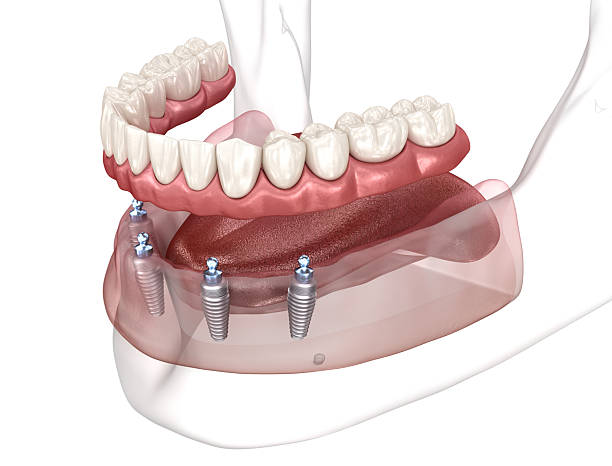
Full arch dental implants, sometimes called full mouth dental implants, replace all or most of the teeth in the upper jaw, lower jaw, or both arches with a fixed restoration supported by multiple dental implants. Instead of a removable appliance, patients receive fixed implant-supported teeth that are anchored directly into the jawbone. The result is a permanent full arch restoration designed to function and feel similar to natural teeth.
How Full Arch Implants Replace an Entire Row of Teeth
A full arch restoration does not require one implant for every missing tooth. Instead, several implant posts are strategically placed in the jawbone, and a connected set of replacement teeth is attached to them. The number and position of implants depend on several factors:
- Available bone in the jaw
- Jaw anatomy and shape
- Bite forces during chewing
- The design of the final prosthetic
- The overall treatment plan created for the patient
Because these factors vary from person to person, the number of implants used is individualized rather than fixed.
How All-on-4, All-on-6, and All-on-X Fit Into Full Arch Treatment
Patients researching full mouth dental implants often come across terms like All-on-4, All-on-6, and All-on-X. These terms describe general implant configurations rather than one-size-fits-all packages:
- All-on-4 generally uses four implants to support a full arch.
- All-on-6 generally uses six implants for additional support.
- All-on-X refers to a customized number of implants based on individual anatomy.
The right configuration depends on bone volume, bite forces, and the patient’s specific treatment needs, not on selecting a predetermined package. Patients weighing these options in more detail can read a full All-on-4 vs All-on-6 dental implants comparison for a deeper look at each approach.
How Full Arch Implants Differ From Removable Dentures
Full arch implant restorations are anchored into the jawbone, while traditional dentures rest primarily on the gums. This structural difference affects stability, since implant-supported teeth do not shift or loosen the way removable dentures can. It also changes daily care, since fixed restorations require different cleaning habits and depend on adequate bone and gum health to remain stable long term.
Who Is Usually a Good Candidate for Full Arch Dental Implants?
Strong candidates for full arch dental implants are generally patients with extensive tooth loss or failing teeth who have enough bone support, or who can receive preparatory treatment to build that support, and who are healthy enough to heal after implant surgery. No single factor confirms candidacy on its own. The sections below look at the specific circumstances that typically bring patients toward full arch treatment.
Patients With Many Missing or Failing Teeth
Full arch treatment may be appropriate when several teeth are missing, loose, severely decayed, fractured, infected, or no longer predictable to restore. These failing teeth are evaluated based on their condition and long-term prognosis, not simply a preference to avoid routine dental work. A full arch implant candidate is typically someone whose remaining teeth cannot reliably support long-term oral health, making full mouth tooth replacement a more practical path forward than repeated repairs to non-restorable teeth.
Long-Term Denture Wearers Seeking More Stable Teeth
Many long-term denture wearers consider full arch dental implants because of ongoing frustrations, including:
- Denture movement while eating or speaking
- Reduced chewing ability
- Sore spots from friction against the gums
- Dependence on denture adhesive
- Changes in jawbone shape over time
- Difficulty eating certain foods
Not every denture wearer qualifies right away. Years of wearing dentures can contribute to bone loss in the jaw, so this needs to be evaluated carefully before a full arch plan is recommended.
Patients Facing Full-Mouth Extractions
Some patients arrive at a consultation with widespread dental breakdown that may require several teeth to be removed. Before recommending extractions, an implant dentist evaluates whether any teeth can be predictably saved, since extraction is not automatically the first or easiest option. When full-mouth extractions are appropriate, treatment generally involves a sequence of extractions, implant placement, temporary teeth, healing, and a final restoration, with the specific plan built around each patient’s oral health.
Patients Who Want Fixed Teeth Instead of a Removable Appliance
One candidacy factor is simply what the patient wants long-term. Some patients specifically want fixed full arch teeth rather than a removable appliance. It helps to understand upfront that fixed does not mean maintenance-free. Patients still need to clean beneath the restoration, attend professional maintenance appointments, and protect their implants from disease and excessive bite force.
How Bone Health Affects Full Arch Implant Candidacy
Bone is one of the most important factors in full arch implant candidacy because implants need to achieve stability within the jaw. Three separate qualities matter here: bone quantity (how much bone is present), bone quality (how dense and structurally supportive it is), and bone distribution (where usable bone is actually located). Bone loss does not automatically disqualify a patient from treatment, but it does change how a plan is designed.
Why Full Arch Implants Need Stable Jawbone Support
Implants need enough healthy bone to remain secure while they heal. As healing progresses, the bone gradually integrates with the surface of the implant through a process called osseointegration, which is what gives the implant its long-term stability. This process is central to implant success, which is why jawbone support and bone quality are evaluated so closely before treatment begins.
Can Patients With Bone Loss Still Qualify?
Many patients with bone loss may still have full arch implant options. Candidacy depends on several variables, including where bone remains, how much bone loss has occurred, the anatomy of the upper versus lower jaw, available implant positioning options, whether grafting would help, and whether advanced implant designs are appropriate for the case. Patients can also learn more about how dental implants help prevent bone loss after missing teeth. No outcome can be guaranteed before an evaluation, but bone loss alone is rarely the end of the conversation.
When Bone Grafting May Be Needed
Bone grafting may be considered when the existing bone cannot provide sufficient support for implant placement. Grafting can help rebuild bone volume, improve implant positioning, and create a stronger foundation for the final restoration. It may also add time to the overall treatment plan, since some cases require a staged approach where the graft heals before implants are placed.
Patients who need this step can review the practice’s extractions and bone grafting services to understand what preparatory treatment can involve.
Why Upper and Lower Jaw Candidacy Can Differ
The upper jaw and lower jaw often present different challenges. The upper jaw typically has softer bone and is located closer to the sinus cavities, while the lower jaw generally has denser bone but requires careful attention to nerve position. Because of these anatomical differences, a patient may qualify differently for the upper arch than for the lower arch, which is why both areas are assessed separately during a full arch bone evaluation.
How Gum Health Affects Full Arch Dental Implant Candidacy
Implants depend on healthy surrounding gum tissue to succeed long term. Patients with active gum disease or untreated infection may need treatment before implant surgery can move forward. Removing damaged teeth does not eliminate the need to control oral bacteria and inflammation elsewhere in the mouth.
Active Gum Disease Should Be Stabilized Before Treatment
Gum disease increases bacterial load and inflammation that can affect the tissue surrounding future implants. Signs that need attention before surgery include bleeding gums, deep periodontal pockets, active infection, bone loss, and poor plaque control. According to the American Academy of Periodontology, risk factors such as prior periodontal disease, smoking, and inconsistent plaque control can contribute to inflammation around dental implants if left unaddressed.
A History of Periodontal Disease Does Not Automatically Disqualify a Patient
Past gum disease is a risk factor to manage, not an automatic exclusion from treatment. Candidacy often improves once the disease is controlled, oral hygiene habits improve, smoking is addressed, maintenance visits are kept, and the patient understands the long-term risk involved in protecting the implants.
Why Soft Tissue Quality Matters Around Full Arch Implants
Adequate gum tissue helps create a healthy seal around the components of an implant, which supports both comfort and long-term cleanability. Factors like tissue thickness, the amount of firm, keratinized tissue around an implant, and even how the final restoration is designed can influence how easy it is to keep the area clean and healthy over time.
Which Health Conditions Affect Full Arch Implant Candidacy?
Overall health plays a significant role in surgical safety and healing. Certain conditions do not rule out treatment on their own, but they do require careful evaluation, and some patients may need medical clearance before moving forward with surgery.
Diabetes and Blood Sugar Control
Well-controlled diabetes does not automatically rule out full arch dental implants. Uncontrolled blood sugar, however, can affect healing and increase infection risk after surgery, which is why blood sugar management is reviewed as part of the evaluation process.
Heart Conditions and Blood-Thinning Medications
Cardiovascular conditions and blood-thinning medications require careful planning and coordination before implant surgery. Any changes to medication must only be made under the direction of the prescribing healthcare provider, never based on general guidance from a dental visit alone.
Osteoporosis and Bone-Related Medications
Osteoporosis does not always prevent full arch implant treatment, but certain bone-related medications and bone metabolism conditions need to be reviewed carefully. This is one of several areas where coordination with a patient’s physician can support a safer treatment plan.
Immune Conditions and Healing Disorders
Conditions that affect immune response or wound healing can increase surgical risk. In these situations, the implant team may coordinate directly with the patient’s physician before recommending a course of treatment.
Sedation and Medical Candidacy
Candidacy for full arch implants and candidacy for a specific sedation method are related but separate decisions. Procedure length, anxiety levels, medical history, and airway considerations all influence sedation planning. Patients who feel anxious about treatment can review the practice’s sedation options for implant surgery to understand what is available for more comfortable care.
Does Age Affect Full Arch Implant Candidacy?
Age alone does not determine candidacy for full arch dental implants. What matters more is biological health, bone condition, healing capacity, and the patient’s ability to maintain the restoration over time.
Are Seniors Candidates for Full Arch Dental Implants?
Many older adults qualify for full mouth dental implants for seniors when they are healthy enough for treatment and have a medical history that can be managed appropriately. For those tired of dealing with loose or uncomfortable dentures, full arch treatment is one of the more stable denture alternatives for seniors to consider. Not every senior is automatically a candidate, which is why an individual evaluation remains necessary regardless of age.
Is There an Upper Age Limit for Full Arch Implants?
There is typically no universal upper age cutoff for full arch treatment. Functional health and a careful risk assessment matter far more than chronological age when determining whether someone can safely move forward with implant surgery.
Why Treatment Goals Matter for Older Patients
Older patients often pursue full arch implants for specific quality-of-life reasons, including eating more comfortably, improving denture stability, reducing embarrassment over failing teeth, simplifying ongoing dental problems into one coordinated treatment plan, and restoring confidence in daily life. These are realistic, meaningful goals, though outcomes still depend on each patient’s individual health and treatment plan.
How Smoking and Lifestyle Habits Affect Candidacy
Smoking is one of the most significant modifiable risk factors in implant candidacy because it affects circulation, healing, infection risk, and long-term implant health. This is a factual consideration rather than a judgment on the patient.
Can Smokers Receive Full Arch Dental Implants?
Some smokers may still be evaluated for full arch dental implants, though smoking does increase overall risk. Carolina Implant may recommend reducing or stopping tobacco use both before and after surgery to support better healing and long-term implant success.
How Teeth Grinding Affects Full Arch Restorations
Grinding and clenching can place excess force on implants and damage the final restoration over time. This is typically managed through bite analysis, careful material selection for the prosthetic, a night guard, and periodic follow-up adjustments as needed.
Why Oral Hygiene Commitment Matters
Fixed full arch teeth still require daily cleaning, both under and around the restoration. Candidacy evaluations take into account whether a patient is willing and able to follow home care instructions and attend professional maintenance visits over the long term.
Who May Not Be Ready for Full Arch Dental Implants Yet?
Some patients are not ready for full arch treatment yet, rather than being permanently excluded from it. Many of the factors below can be treated or improved before revisiting candidacy.
Patients With Uncontrolled Oral Infection
Active infection in the mouth should be diagnosed and managed before any definitive implant treatment begins.
Patients With Uncontrolled Medical Conditions
Elective implant surgery may need to wait until certain health risks are better managed under a physician’s care.
Patients With Unrealistic Expectations
Full arch dental implants are not instant, indestructible, or maintenance-free. Before moving forward, it helps to have realistic expectations about healing time, temporary teeth, ongoing maintenance, temporary food restrictions, the timing of the final restoration, and the need for follow-up care.
Patients Unwilling to Maintain Their Implants
Long-term success depends on consistent home cleaning, regular maintenance visits, and reporting any problems early. Patients who are not ready to commit to this level of care may benefit from revisiting the decision once their circumstances change.
What Happens During a Full Arch Implant Candidacy Evaluation in Raleigh, NC?
Understanding what happens during an evaluation can make the process feel less uncertain. A thorough review of a patient’s dental and medical history is typically the starting point for any full arch candidacy assessment.
Review of Dental and Medical History
The implant team reviews current medications, past surgeries, existing medical conditions, smoking status, gum disease history, and any previous experience with implants or dentures.
Examination of Teeth, Gums, and Bite
The dentist examines which teeth are restorable, evaluates gum health, assesses bite forces, and reviews jaw position and available restorative space.
3D Imaging and Bone Assessment
Advanced 3D imaging helps measure important details that cannot be seen with the naked eye, including:
| What 3D Imaging Measures | Why It Matters for Candidacy |
| Bone height | Determines available vertical space for implants |
| Bone width | Affects implant positioning and stability |
| Bone density | Influences healing and long-term implant support |
| Sinus position | Important for upper jaw implant planning |
| Nerve position | Important for lower jaw implant safety |
| Implant placement options | Guides the overall treatment plan |
Patients interested in the imaging and planning tools used during this process can review the practice’s dental implant technology page for more details.
Reviewing All-on-4, All-on-6, and Other Full Arch Options
The dentist may review multiple approaches based on each patient’s anatomy and treatment goals. No single system is presented as universally superior, since the right configuration depends entirely on the individual case.
Discussing Treatment Sequence, Healing, and Final Teeth
A full arch consultation generally covers the overall sequence of care, including any needed extractions, implant placement, temporary restoration, the healing period, the final restoration, and what ongoing maintenance will look like. Specific timelines vary by patient, so this is discussed individually rather than presented as a fixed schedule.
Frequently Asked Questions About Full Arch Implant Candidacy
Can I get full arch implants if I have bone loss?
Possibly. Imaging is needed to determine how much bone remains, where it is located, and whether grafting or an alternative implant approach would be appropriate for your case.
Can I get full arch implants if I have gum disease?
Active gum disease usually needs to be stabilized first. A history of gum disease does not automatically rule out treatment once the condition is under control.
Am I too old for full arch dental implants?
Age alone is not the deciding factor. Overall health and healing capacity matter more than chronological age when it comes to candidacy.
Can smokers get All-on-4 dental implants?
Smoking increases risk and can affect candidacy, healing recommendations, and long-term prognosis. Some smokers may still be evaluated, often alongside guidance on reducing tobacco use.
Do I need all my teeth removed for full arch implants?
Only teeth that cannot be predictably retained are typically considered for removal. The overall plan depends on the condition of your existing teeth.
Can full arch implants be placed without bone grafting?
Some patients qualify without grafting, while others need bone augmentation first. This depends on individual anatomy and what is needed for implant stability.
Are full arch dental implants fixed or removable?
Many full arch restorations are fixed directly to the implants rather than removable like traditional dentures. The exact design and maintenance protocol can still vary by case, depending on the treatment plan.
Find Out Whether Full Arch Dental Implants Are Right for You in Raleigh, NC
Living with loose dentures, widespread tooth loss, or failing teeth can make everyday eating, speaking, and smiling more difficult than it should be. A consultation is the most reliable way to get clear answers about your remaining teeth, bone support, gum health, full arch options, treatment sequence, and what ongoing maintenance would look like for your situation. Carolina Implant works with patients throughout the Raleigh area to evaluate each of these factors individually rather than relying on general assumptions about age or bone loss. If you have been wondering whether full arch dental implants could be right for you, scheduling a full arch implant consultation in Raleigh, NC, is the next step toward a personalized evaluation.