
Losing a tooth affects more than your smile. When a tooth is missing, the jawbone underneath it no longer receives the stimulation it needs from chewing. Without that signal, the bone begins to shrink gradually over time.
That bone loss is not just a structural issue. It can affect how your bite functions, how your face looks, and what tooth replacement options remain available to you down the road.
For patients in Raleigh, NC weighing their options after tooth loss, understanding what happens beneath the gum line is just as important as replacing the visible tooth. Dental implants address both, and this article explains why that matters for your long-term oral health.
Why Jawbone Loss Happens After Tooth Loss
Natural Tooth Roots Stimulate the Jawbone
Your tooth roots do more than anchor teeth in place. Every time you chew, your roots transfer pressure into the surrounding bone, signaling the body to maintain bone volume and density.
When that root is gone, the stimulation stops and the body begins to remodel the unused bone. This process is called bone resorption, and it causes the alveolar ridge to shrink in both height and width over time.
What Happens to Bone When a Tooth Is Missing
Bone loss after tooth loss is not a one-time event. It is a gradual, progressive process that continues the longer a tooth goes unreplaced.
This matters because significant bone loss can make future implant placement more complex. Early evaluation and timely tooth replacement help protect your options before that process advances.
Why Bone Loss Can Continue Over Time
The body has no reason to maintain bone it is no longer using. Without a root transferring chewing force into the jaw, the bone in that area continues to shrink gradually.
In some cases, bone grafting may be needed before an implant can be placed if too much bone has been lost. The earlier a missing tooth is addressed, the more bone is typically preserved.
How Dental Implants Help Preserve Jawbone
Dental Implants Act Like Artificial Tooth Roots
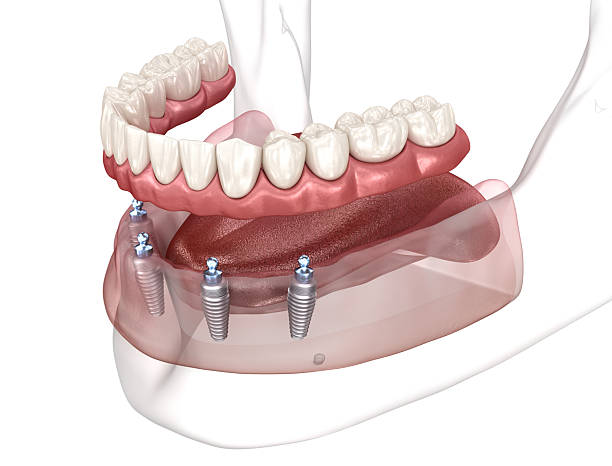
A dental implant is a small titanium post placed directly into the jawbone, serving as an artificial tooth root. It supports a crown, bridge, or full arch restoration above the gum line while functioning at the root level beneath it.
Because the implant is anchored in bone, it does what surface-level replacements cannot. It restores the tooth where it matters most for long-term jawbone health.
How Osseointegration Supports Bone Stability
After placement, the implant bonds with the surrounding bone through a process called osseointegration. The bone grows around the implant post, creating a stable connection that transfers chewing force into the jaw.
That stimulation signals the body to maintain bone volume and density in the area, the same way a natural tooth root does.
Why Implants Help Maintain Bone Volume Better Than Surface-Level Tooth Replacement
Options that sit on top of the gums do not interact with the bone beneath them. Without root-level contact, bone resorption continues regardless of what restoration sits above the gum line.
Dental implants are the only tooth replacement option that replaces the root itself. This is why implant bone stimulation plays a direct role in jawbone preservation that other options cannot replicate.
Why Bridges and Dentures Do Not Preserve Bone the Same Way
| Tooth Replacement Option | Replacing Root? | Stimulates Jawbone? | Helps Preserve Bone? |
| Dental Implant | Yes | Yes | Yes |
| Traditional Dental Bridge | No | No | No |
| Removable Dentures | No | No | No |
| Implant-Supported Dentures | Yes (implants) | Yes | Yes |
Why Traditional Dental Bridges Replace the Tooth but Not the Root
A traditional dental bridge fills the visible gap using the teeth on either side as anchors. It restores chewing function and appearance, but no implant post is placed in the area of the missing tooth.
Because the bone beneath that gap receives no stimulation, bone resorption can continue under a bridge over time.
Why Removable Dentures Cannot Stop Jawbone Shrinkage
Removable dentures rest on the gum tissue. They do not replace tooth roots, and they do not deliver chewing force into the bone below them.
As the jawbone continues to shrink under dentures, the fit of the denture can change. Loose or shifting dentures are often a sign that bone loss has continued since the original fitting.
Why Implant-Supported Teeth Provide More Bone Support
Implant-supported crowns, bridges, and full arch restorations all use implant posts anchored in the jawbone. These implants transfer chewing force into the bone, providing the stimulation needed to help maintain bone support.
This is the structural difference between implant-supported tooth replacement and options that only restore what is visible above the gum line.
How Missing Teeth Can Change Facial Structure
How Bone Loss Can Affect the Lower Face
The jawbone provides the structural foundation for the lower third of the face. As bone volume decreases after tooth loss, the support beneath the skin and soft tissue changes.
Over time, this may contribute to sunken cheeks, a reduction in lower facial height, or deeper folds around the mouth. These changes tend to develop gradually and can become more noticeable with multiple missing teeth or full arch tooth loss.
Why Back Teeth Matter for Facial Support
Many patients focus on front tooth gaps because they are visible. However, losing back teeth, including molars and premolars, affects bite height and the balance of chewing forces across the jaw.
Back teeth support vertical facial dimensions. When they are missing, the bite can collapse inward, which affects jaw function and facial profile even when the gap is not immediately visible.
Why Full Arch Tooth Loss Can Cause More Noticeable Facial Changes
Losing most or all teeth accelerates jawbone deterioration because stimulation is lost across the entire arch. Without bone support, the lower face may appear to shrink inward over time.
Full arch dental implants in Raleigh, NC address this by restoring root-level support across the jaw, which helps maintain facial dimensions and bite function.
Bone Preservation Benefits of Single Tooth Dental Implants
Preserving Bone Around One Missing Tooth
A single tooth implant helps maintain bone in the specific area where the root was lost. This is important whether the missing tooth is a visible front tooth or a back molar.
Without a replacement, that localized area of bone begins to shrink, which can affect adjacent teeth and the surrounding gum tissue. Patients who want to understand what that process involves can find more detail on the single tooth implant options available at Carolina Implant.
Helping Prevent Tooth Shifting and Bite Changes
When a gap is left untreated, neighboring teeth may gradually shift toward the open space. This can affect bite alignment, spacing, and how other teeth wear over time.
Replacing the missing tooth with an implant-supported crown helps preserve spacing and supports the natural position of surrounding teeth.
Supporting Long-Term Oral Health
Replacing a missing root helps protect more than the gap. Bone preservation in one area supports the stability of nearby teeth, helps maintain gum contour, and keeps future treatment options available.
The earlier a missing tooth is addressed, the more bone is typically preserved.
Bone Preservation Benefits of Full Arch Dental Implants
How Full Arch Implants Support the Jaw
Full arch implants use multiple implant posts placed strategically along the jaw. A fixed restoration attaches to these posts and functions as a complete set of teeth.
Because the implants are anchored in bone, chewing force transfers into the jaw at multiple points, helping to maintain bone volume across the full arch. Patients comparing options can find a detailed breakdown of All-on-4 vs All-on-6 dental implants and how each approach differs for full arch tooth replacement.
Why Full Arch Implants Can Improve Facial Support
Fixed implant-supported teeth restore vertical bite support, which helps maintain the spacing between the upper and lower jaws. This can support facial balance and reduce the progressive facial changes associated with full arch tooth loss.
Results vary by patient, but restoring the bite at the correct height is a meaningful part of full mouth dental implant treatment.
Why Denture Wearers Often Ask About Bone Loss
Many patients who have worn traditional dentures for years notice that their fit has changed. Dentures become loose because the jawbone beneath them has continued to shrink.
This is one of the most common reasons denture wearers begin asking about implant-supported dentures and full arch alternatives. Once bone loss has progressed, implant placement may require additional steps, which is why earlier evaluation is helpful.
Why Socket Preservation and Bone Grafting Matter Before Dental Implants
Socket Preservation After Tooth Extraction
When a tooth is removed, the empty socket begins to heal on its own. Without intervention, a significant amount of bone volume can be lost during this early healing period.
A procedure called socket preservation after tooth extraction places graft material directly into the socket at the time of removal. This helps maintain the bone’s shape and volume, which can make future implant placement more predictable and may reduce the need for more extensive grafting later.
Bone Grafting When Bone Loss Has Already Occurred
If bone loss has already occurred before implant planning begins, bone grafting may help rebuild the volume needed to support an implant. The extractions and grafting process at Carolina Implant is handled in-house, which means the same team manages both the preparation and the implant placement.
Not every patient needs grafting, but for those who do, it is often an important step toward successful implant placement.
Why Early Planning Can Protect Future Implant Options
Timing matters when it comes to preserving jawbone health. Patients who plan for implants before or soon after extraction often have more bone available to work with.
A thorough evaluation that includes 3D imaging helps the implant team understand what bone is present and what steps, if any, are needed before placement. Acting earlier generally means more options.
Can Dental Implants Help If Bone Loss Has Already Happened?
Why Bone Loss Does Not Automatically Rule Out Implants
Many patients worry they have waited too long. Bone loss alone does not automatically disqualify someone from dental implants. Many patients with moderate bone loss can still receive implants after a proper evaluation.
In some cases, bone grafting, a sinus lift, or advanced implant planning may be part of the process. The right approach depends on how much bone remains, where it is located, and what restoration is planned.
How Imaging Helps Measure Bone Volume
3D cone beam imaging (CBCT) gives the implant team a detailed view of bone height, width, and density. It also shows the position of the sinus and nerve pathways, which are important for safe implant placement.
This imaging is a standard part of the evaluation process at Carolina Implant and helps create a treatment plan based on your actual anatomy.
Why Each Implant Plan Must Be Customized
No two bone loss cases are the same. The treatment plan depends on the location of the missing tooth, the amount of bone remaining, your overall health, and the type of restoration being planned.
A customized approach means patients are not ruled out based on general assumptions. The evaluation determines what is possible for your specific situation.
FAQs About Dental Implants, Bone Loss, and Facial Structure
Do dental implants prevent bone loss?
Dental implants help preserve bone by replacing the tooth root and transferring chewing force into the jawbone. This stimulation signals the body to maintain bone volume in the area, which does not happen with surface-level replacements.
Can dentures prevent jawbone shrinkage?
Traditional removable dentures do not replace tooth roots and do not stimulate the jawbone. Over time, bone loss continues under dentures, which is why denture fit often changes over the years.
How soon does bone loss start after losing a tooth?
Bone changes can begin in the weeks and months following tooth loss and continue gradually over time. The rate and amount of bone loss varies by patient, which is why timely evaluation matters.
Can bone be rebuilt before dental implants?
Yes. Bone grafting may help rebuild bone volume in areas where loss has occurred. This can make implant placement possible for patients who might not otherwise have enough bone to support an implant.
Do dental implants help support facial appearance?
By preserving bone and restoring bite function, implants help maintain the structural support the jaw provides to the face. This does not guarantee cosmetic changes, but it does address one of the underlying causes of facial changes after tooth loss.
Are implants better than bridges for preserving bone?
Implants preserve bone better because they replace the tooth root and stimulate the jawbone. A traditional bridge replaces the visible tooth but does not address the bone beneath the gap, which continues to resorb over time.
Schedule a Dental Implant Consultation in Raleigh, NC
Missing teeth affect more than chewing. Over time, they can change the bone structure that supports your face, your bite, and your remaining teeth. The good news is that the earlier bone loss is addressed, the more options you typically have.
At Carolina Implant in Raleigh, NC, our team evaluates bone support, imaging, and your overall oral health to determine whether dental implants are the right fit for your situation. We offer single tooth implants, full arch dental implants, bone grafting, and sedation dentistry, all in one location.
If you have missing teeth, loose dentures, failing teeth, or concerns about bone loss, we encourage you to schedule a free consultation. Our team will review your bone structure, discuss your options, and help you understand what treatment looks like for your specific needs.
Carolina Implant serves patients in Raleigh, North Raleigh, Cary, Apex, Wake Forest, Garner, Holly Springs, Morrisville, Durham, and Chapel Hill. If you have questions about bone loss, tooth replacement, or whether dental implants are right for you, scheduling a free consultation is a good place to start.